Sugesti Font Evaluation
In the landscape of digital and print typography, selecting the right typeface is a critical decision that influences brand identity, readability, and overall aesthetic impact. Sugesti has emerged as a distinctive option for designers seeking a script typeface that balances elegance with functional versatility. This article provides an objective analysis of Sugesti, examining its characteristics, technical specifications, and ideal use cases to help you determine if it aligns with your specific project requirements.
Understanding the Design Characteristics
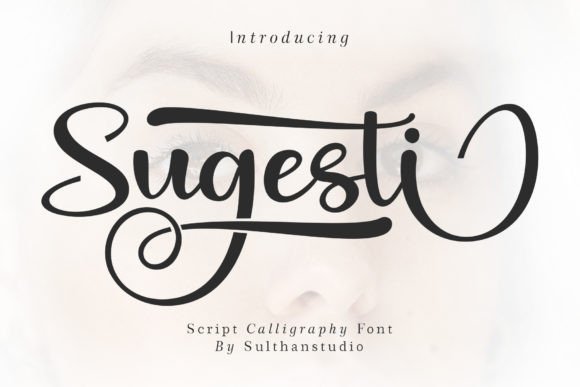
Sugesti is classified as a bold script font, a category defined by fluid strokes, connected letterforms, and a sense of movement. Unlike traditional serif or sans-serif fonts that prioritize geometric uniformity, Sugesti offers a more organic appearance. The design is characterized by its sophisticated curves and unique terminal shapes, which give it a high-end feel often associated with luxury brands or formal events.
The "bold" designation in this context does not merely refer to weight but also implies a strong presence on the page. The thick strokes ensure legibility even at smaller sizes, while the intricate details maintain visual interest. This combination allows the font to function effectively in both large-scale applications, such as signage, and detailed work, like wedding invitations. The uniqueness of the glyph shapes distinguishes it from more generic cursive typefaces, providing a custom look without the cost of commissioning bespoke lettering.
Technical Specifications and Accessibility
A significant consideration for any professional designer is the technical robustness of a font file. Sugesti utilizes PUA (Private Use Area) encoding. In standard Unicode, there are limited slots available for special characters, ligatures, and swashes. By utilizing the Private Use Area, Sugesti ensures that all alternate glyphs, decorative swashes, and specialized ligatures are fully accessible within the font file.
This encoding method offers several practical advantages:
- Complete Glyph Access: Users can access the full range of stylistic alternates without needing multiple font files or complex OpenType feature toggles.
- Workflow Efficiency: Because the swashes and specials are mapped directly to specific keys or accessible via standard character maps, the design process becomes faster and less prone to errors.
- Consistency: PUA encoding ensures that the font behaves predictably across different software platforms, reducing the risk of missing glyphs when transferring files between systems.
However, users should be aware that PUA fonts may require specific handling in certain legacy systems or web environments where non-standard Unicode mappings are not supported. For modern desktop publishing and graphic design workflows, however, this technical architecture is generally seamless.
Ideal Applications and Use Cases
Due to its elegant yet assertive nature, Sugesti is particularly well-suited for projects requiring a touch of formality mixed with artistic flair. The following scenarios represent situations where this font typically excels:
Event Branding and Stationery
Wedding invitations are a primary application for Sugesti. The font's sophistication conveys the importance of the occasion, while its readability ensures guests can easily read the necessary details. Beyond weddings, it is effective for event programs, place cards, and certificates where a personal, handwritten feel is desired without sacrificing clarity.
Logo Design and Identity Systems
For businesses aiming to project a premium image, Sugesti serves as a strong foundation for logo creation. Its unique letterforms can act as a memorable visual anchor. It is frequently used in branding for boutiques, salons, bakeries, and lifestyle brands. The bold script style works particularly well when paired with clean, minimal sans-serif body text to create a balanced typographic hierarchy.
Merchandise and Apparel
The high contrast and distinct shape of the letters make Sugesti highly effective for t-shirt graphics and apparel printing. When screen printed or embroidered, the bold strokes prevent the text from becoming muddy or indistinct. It adds a trendy, boutique feel to clothing lines and promotional merchandise.
Editorial and Marketing Materials
In the realm of print media, Sugesti is excellent for headlines, posters, and magazine titles. It captures attention quickly due to its dynamic flow. It is also suitable for labels and packaging, where space is often limited but a strong brand voice is essential. The font's ability to stand out on shelves makes it a valuable asset for product differentiation.
Evaluating Tradeoffs and Considerations
While Sugesti offers many benefits, a balanced evaluation requires acknowledging its limitations. Script fonts, by their nature, are not universally applicable. They carry specific expectations regarding tone and readability that must be managed carefully.
Readability Constraints
The primary tradeoff of using Sugesti is reduced legibility compared to neutral typefaces. In long-form body copy, the connected strokes and decorative elements can cause eye fatigue and hinder reading speed. Consequently, it is rarely recommended for paragraphs of text, user interface elements, or data-heavy documents. Its strength lies in display usage—titles, headers, and short phrases.
Tone and Context
The sophisticated and somewhat ornate nature of Sugesti dictates the emotional response of the viewer. It may not be appropriate for contexts requiring a minimalist, industrial, or highly corporate aesthetic. Using a bold script font for a law firm, a technology startup, or a healthcare provider might send mixed signals unless the brand strategy explicitly aims for a softening of the image.
Web Implementation Challenges
Although PUA encoding solves many local workflow issues, implementing Sugesti on the web requires careful planning. Since PUA characters are not part of the standard Unicode set, they may not render correctly on all devices or browsers if the font file is not properly embedded. Furthermore, web performance considerations apply; loading a heavy script font with numerous swashes can impact page load times if not optimized.
Decision-Making Insights
To determine if Sugesti is the right choice for your project, consider the following criteria:
- Project Scope: Is the text primarily display-based (headlines, logos) or body text? If it is display-based, Sugesti is a strong candidate.
- Brand Alignment: Does your brand voice align with elegance, creativity, and warmth? If yes, the font's personality matches your goals.
- Technical Environment: Are you working in a modern design suite where PUA encoding is fully supported? If so, you will have full access to the font's features.
- Legibility Needs: Will the audience need to read the text quickly and repeatedly? If the content is dense, a simpler alternative may be necessary.
When to Consider Alternatives
If your project demands extreme legibility, neutrality, or a strictly modern aesthetic, alternatives to Sugesti should be explored. For instance, a humanist sans-serif might offer a similar approachable feel without the complexity of script connections. If you require a script font that mimics casual handwriting rather than formal calligraphy, a different typeface with looser spacing might be more appropriate.
Additionally, if your project involves internationalization where multilingual support is critical, verify that Sugesti supports the required character sets, as some specialized scripts have limited language coverage.
Conclusion
Sugesti represents a compelling option for designers looking to incorporate a bold, sophisticated script into their work. Its PUA encoding ensures a comprehensive library of glyphs, facilitating a smooth creative process. While it is not a one-size-fits-all solution, its strengths in branding, event design, and editorial headlines make it a valuable asset in a professional toolkit. By weighing its aesthetic appeal against functional constraints, you can make an informed decision that enhances your project's visual communication.