Lovin Summer: A Balanced Evaluation of a Dual-Style Font Duo
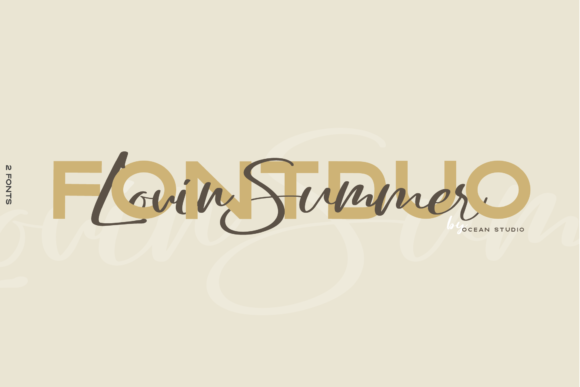
In the landscape of digital and print design, selecting the right typography is rarely about finding a single "perfect" font. Instead, it involves curating a cohesive visual language that balances personality with readability. This is where Lovin Summer enters the conversation as a compelling option for designers seeking to merge elegance with structural integrity. As a beautiful duo font, it combines a gorgeous script with a stylish and strong sans serif, offering a solution that addresses the common challenge of maintaining brand consistency across different media.
When evaluating Lovin Summer, one must look beyond simple aesthetic appeal. The true value lies in its functional versatility. For professionals aged 20 to 50 who are constantly comparing options or researching resources for branding projects, understanding the specific tradeoffs of this typeface is essential. It is not merely a decorative element; it is a strategic tool designed to add a sophisticated touch to your designs while ensuring legibility in practical applications.
The Architecture of a Font Duo
To understand why Lovin Summer stands out, it is necessary to deconstruct what makes a "duo" font effective. In many modern design systems, relying on a single typeface can lead to visual monotony or a lack of hierarchy. Conversely, combining two unrelated fonts often results in a disjointed appearance that confuses the viewer. Lovin Summer solves this by being engineered as a unified pair.
- The Script Component: This element provides the emotional hook. It is described as a gorgeous script, suggesting fluidity and human touch. In design theory, scripts are often used to convey warmth, creativity, or exclusivity.
- The Sans Serif Component: This serves as the anchor. By pairing the script with a stylish and strong sans serif, the design gains stability. The sans serif ensures that critical information remains readable even when the script might be too ornate for body text.
This combination creates a dynamic tension between movement and structure. When used correctly, the script draws the eye to headlines or key phrases, while the sans serif carries the weight of longer passages or technical details. This balance is particularly relevant for users who need to create content that feels personal yet professional.
Evaluating Use Cases and Application Scenarios
The question of whether Lovin Summer fits your project depends heavily on the intended output. While no single font is universally applicable, there are specific scenarios where this duo excels. Understanding these best-fit situations helps designers avoid misapplication, which can undermine the sophistication the font aims to achieve.
Branding and Logo Design
Logos require immediate recognition and scalability. The strength of Lovin Summer in this arena comes from its ability to offer both character and clarity. A logo utilizing the script portion can feel bespoke and handcrafted, whereas the accompanying sans serif ensures the brand name remains legible at small sizes, such as on social media avatars or mobile app icons. For startups or boutique businesses looking to establish a sophisticated identity without appearing corporate or cold, this duality offers a distinct advantage over using a purely geometric sans serif or a highly ornamental calligraphy font alone.
Stationery and Greeting Cards
Physical materials like stationery and greeting cards rely heavily on texture and tone. Here, the gorgeous script of Lovin Summer shines. It mimics the imperfections of handwriting, adding a layer of intimacy that digital sans serifs often lack. However, the inclusion of the strong sans serif allows for the necessary functional elements—addresses, dates, or instructions—to remain crisp and easy to read. This prevents the design from becoming so stylized that it loses its communicative function.
Quotes and Editorial Content
In digital marketing and editorial contexts, quotes serve as engagement hooks. Using Lovin Summer for pull quotes can break up the monotony of standard body text. The contrast between the flowing script and the structured sans serif creates a visual rhythm that encourages scanning. However, designers must exercise caution here. If the background is busy or the color contrast is low, the intricate details of the script may disappear, rendering the quote ineffective.
Comparing Approaches: Duo Fonts vs. Single Typefaces
When researching alternatives, designers often face a choice between investing in a comprehensive font family (a duo) versus purchasing separate fonts from different foundries. This comparison requires an analysis of cost, cohesion, and workflow efficiency.
Cohesion and Consistency: The primary benefit of Lovin Summer as a pre-matched pair is inherent harmony. When designers select individual fonts to match, they risk creating a clash in x-heights, stroke weights, or overall mood. With a duo like Lovin Summer, the relationship between the script and the sans serif is already resolved. This reduces the cognitive load on the designer and ensures that the final output looks intentional rather than accidental.
Workflow Efficiency: For professionals managing multiple projects, time is a critical resource. Sourcing, testing, and licensing two separate fonts can double the administrative work. A duo package streamlines this process. Once the user has evaluated the fit of Lovin Summer, they have two complementary tools ready for immediate deployment. This efficiency is particularly valuable for freelancers and agency owners who need to deliver high-quality branding quickly.
The Tradeoff of Flexibility: However, there is a limitation to consider. A dedicated duo offers less flexibility than a massive family. If a project requires a wide range of weights (e.g., light, regular, bold, black) within the sans serif component, a single-family system might be superior. Lovin Summer is optimized for the specific pairing of script and sans serif. If a designer needs a heavy display font for a billboard, they may find the available weights in the duo insufficient compared to a larger, more versatile typeface family.
Decision Factors: When to Choose Lovin Summer
Selecting the right typography is ultimately a decision based on context. To help you evaluate if Lovin Summer is the right choice for your next project, consider the following factors regarding strengths, limitations, and audience perception.
- Brand Personality: Is your brand aiming for a balance of approachability and professionalism? If yes, the sophisticated touch provided by the script/sans serif mix is ideal. If your brand requires strict minimalism or high-tech precision, a pure sans serif might be a better fit.
- Medium of Delivery: Will the design be viewed primarily on screen or in print? The script component of Lovin Summer relies on fine lines that can sometimes suffer on low-resolution screens. Ensure that the target medium supports the detail level of the font.
- Volume of Text: Remember that scripts are generally unsuitable for long-form reading. If your project involves extensive body copy, you will rely almost entirely on the sans serif component. Evaluate whether the sans serif style meets your readability standards before committing to the duo.
- Uniqueness vs. Familiarity: Using a popular font can make a design feel generic. Lovin Summer offers a distinct voice that sets a brand apart from competitors using standard Google Fonts or ubiquitous commercial libraries. However, this uniqueness comes with the responsibility of ensuring the audience understands the message immediately.
Navigating Limitations and Alternatives
No design asset is without its constraints. While Lovin Summer is a robust tool, it is not a universal solution. One significant limitation is the specificity of the script style. If a project requires a very formal, traditional calligraphy style (like Copperplate) or a casual, marker-style script, this particular duo may not align with those specific aesthetic goals.
Furthermore, in industries with strict regulatory guidelines regarding readability—such as healthcare or finance—the use of script fonts can sometimes be discouraged due to potential legibility issues. In these cases, the sans serif component of Lovin Summer would be the only viable option, effectively rendering the "duo" aspect redundant. Designers must weigh the desire for stylistic flair against the necessity for absolute clarity.
For those who find Lovin Summer does not quite hit the mark, the market offers various alternatives. Some may prefer a variable font that allows for continuous adjustment of weight and width, offering more control than a fixed duo. Others might opt for a "display + body" strategy using two completely separate typefaces from different families to achieve a higher degree of contrast. However, these approaches require more expertise to execute successfully without creating visual chaos.
Final Thoughts on Strategic Typography
The decision to use Lovin Summer should be driven by a clear understanding of the design problem at hand. It is a powerful resource for those seeking to inject sophistication and personality into their work without sacrificing structural logic. Its strength lies in the seamless integration of a gorgeous script and a stylish, strong sans serif, making it a versatile candidate for logos, branding, quotes, stationery, and greeting cards.
By carefully considering the strengths and tradeoffs outlined above, designers can determine if this duo aligns with their specific creative vision. Whether you are building a new brand identity or refining an existing one, the right typography acts as the foundation upon which all other design elements rest. Lovin Summer offers a solid, elegant foundation for those ready to embrace a blend of artistic flair and modern utility.